
Our Recipes
WHAT ARE YOU LOOKING FOR?
Sides and Salads

Jack Squat Gravy
-
Roasting:
Turkey (2 legs, 2 thighs, and 2 wings)
6 tbsp of butter, softened
2 large carrots, large dice
1 large onion, large dice
3 celery stalks, large dice
½ lemon, juiced
3 cloves garlic, lightly smashed with skin removed
4 fresh sage leaves
6 fresh thyme sprigs
3 tbsp olive oil
2 tsp salt, divided
Fresh cracked pepper
Gravy Making:
2 tbsp cognac (a splash)
1 tbsp Dijon mustard
6 cups turkey (or chicken) stock
2 tsp red wine vinegar
1 tsp sugar
Cornstarch slurry (1 tbsp water to 1 tbsp cornstarch)
2-3 tbsp heavy cream
-
Roasting:
Preheat oven to 350 °F (176 °C).
In a roasting pan, combine the carrots, celery, onion, garlic, sage and thyme.
Add the lemon juice (and toss the lemon in the mix), olive oil, 1 tsp of salt, fresh cracked pepper, and toss together.
Bake for 30 minutes, stirring a couple times.
While the vegetable pre-bake, dry the turkey with a paper towel.
Massage the butter all over each piece using the other tsp of salt and fresh cracked pepper to season.
Once the vegetables have baked for 30 minutes, take them out of the oven and turn the oven down to 300 °F (150 °C).
Place the turkey on a rack over the vegetables and cook over the vegetables until the internal temperature of the turkey is 160 – 165 °F (72 – 74 °C).
Remove the lemon and discard.
Save the turkey for sandwiches!
Gravy-making:
Over medium heat, place the pan of vegetables directly on 2 burners of the stove.
Once the vegetables are nice and hot, take the pan off the burners and add the cognac to deglaze.
Place back on the burners and let the alcohol from the cognac cook off a bit. Add the mustard and whisk around a bit. Then add the turkey stock. Cook for about 15 minutes so the vegetables are nice and soft.
Take the mixture and buzz (not too intensely as not to whip air into it) in the blender.
From the blender, strain thru a fine mesh sieve and put back into a saucepan.
Add in the red wine vinegar and sugar.
Cook on high until the gravy reduces by half.
Taste and adjust the seasonings according to your liking.
Add the cornstarch slurry.
Cook until it reduces to your desired thickness.
Finish with heavy cream and adjust the seasonings again.
Chef’s note: If you are using store bought stock, taste as you go to make sure it is not too salty.
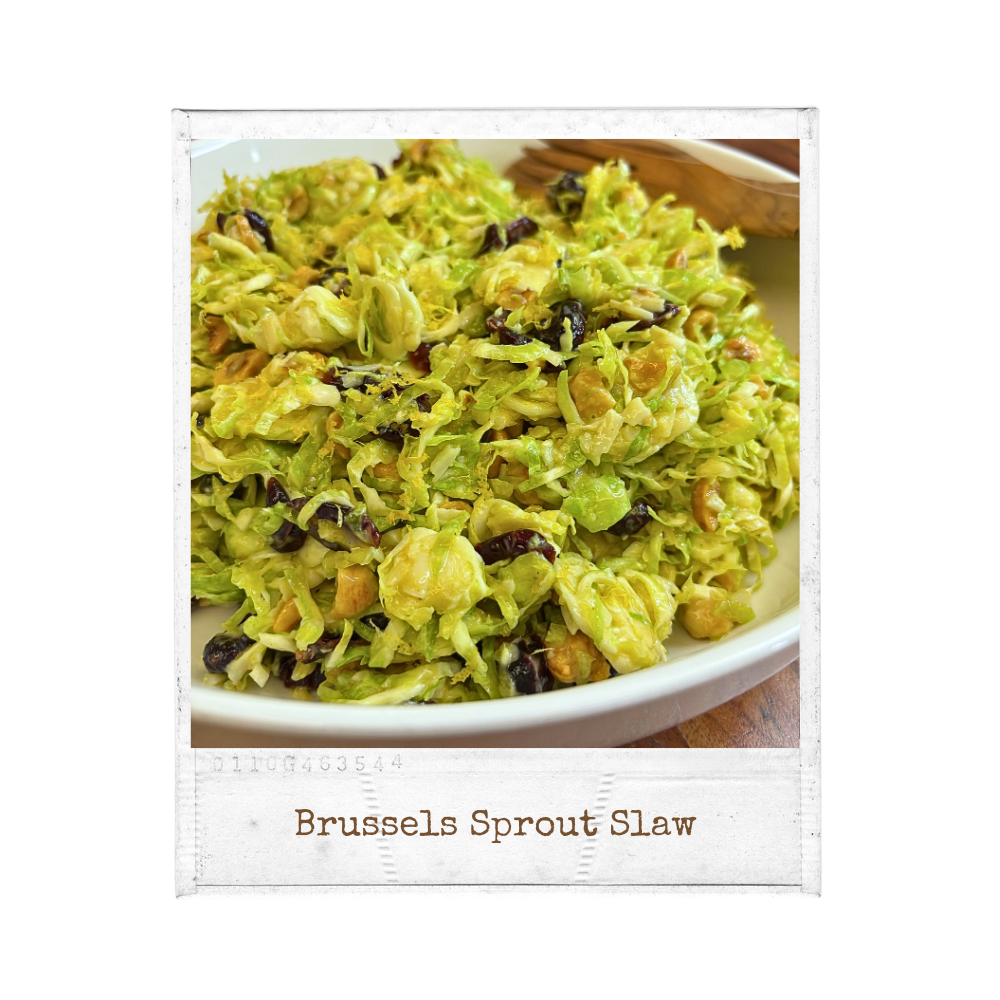
Brussels Sprout Slaw
-
500 grams brussels sprouts, cleaned
115 grams parmesan cheese, shredded
150 grams dried cranberries
115 grams hazelnuts (without skin), toasted and roughly chopped
2 tbsp nutritional yeast
Zest and juice of 1 lemon, separated
2 cloves garlic, finely chopped
2 tbsp champaign vinegar
2 tbsp Dijon mustard
2 tbsp capers, drained
1 tbsp honey
1 cup olive oil
¼ tsp pepper
¼ tsp salt
-
Thinly shred the brussels sprouts. I used number 2 setting on my food processor.
Toss together the shaved brussels sprouts, parmesan, cranberries, and hazelnuts.
For the dressing, add nutritional yeast, lemon juice, garlic, vinegar, mustard, capers, honey, and pepper into a blender. Once combined, slowly add the olive oil and then salt to taste.
Pour half the salad dressing over the brussels sprouts mixture and toss to combine. Continue to add more dressing to get your desired consistency.
Pour into your serving dish and garnish with the lemon zest.
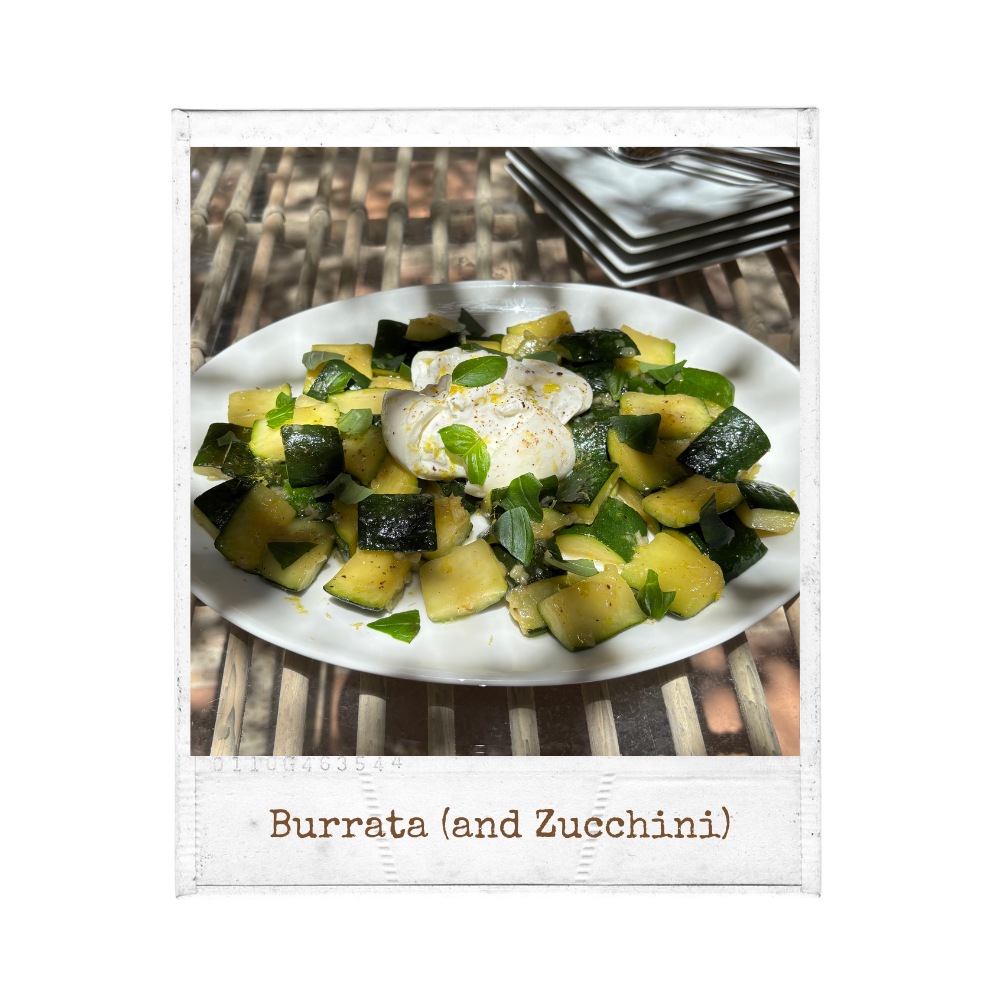
Burrata (with Zucchini)
-
2 large zucchinis
1 shallot, diced
1 clove garlic, minced
1 tbsp butter
1 tbsp olive oil
¼ cup chicken or vegetable stock
-
Slice the zucchini around the core (discarding the core). Cut the large pieces of zucchini into about 1-inch sections and set aside.
In a large sauté pan over medium heat, add the butter and olive oil until melted together.
Add the shallots and sweat for a couple minutes followed by the garlic.
Toss in the zucchini and cook for about 10-15 minutes, stirring every so often. You are looking for the zucchini to be cooked on the outside but still a bit crunchy in the middle. Salt and pepper to taste.
Pour in the chicken stock and cook for a couple more minutes until it creates a thick coating for the zucchini.
Remove and let cool to room temperature.
-
Assembly:
1 fresh burrata
Zest of 1 lemon
5 basil leaves
Olive oil
Salt and pepper
Directions:
Place all the zucchini on a platter and top with the burrata.
Cut the burrata crosswise down the middle and stretch out a bit.
Garnish with lemon zest, torn basil, and olive oil. Salt and pepper to taste.
Chef’s note: I prefer to serve the zucchini at room temperature or slightly chilled. I find the flavor of the zucchini is brighter.
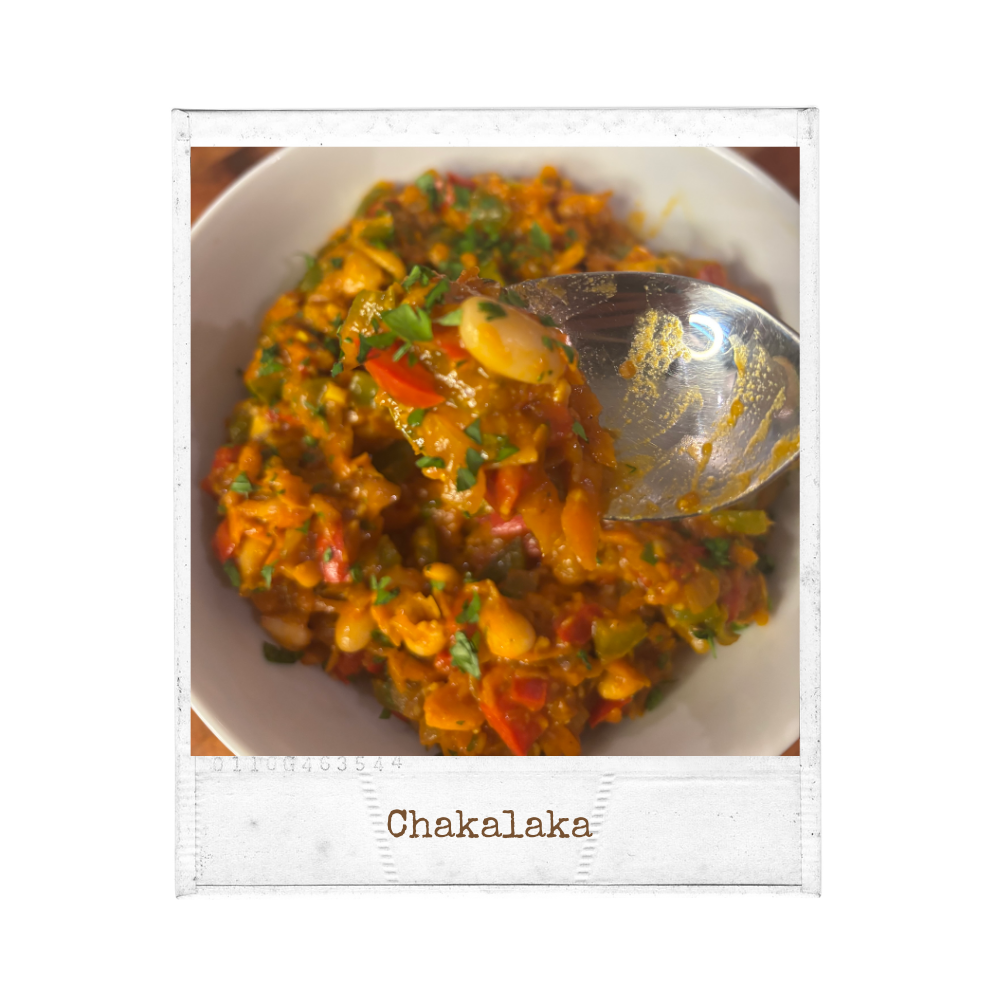
Chakalaka
-
2 tbsp olive oil
1 medium red onion, diced
2 bell peppers (red, green, yellow or orange), diced
2-3 cloves garlic
2-3 tbsp tomato paste
2 medium carrots, shredded
2 tsp curry powder
½ tsp smoked paprika
Pinch of cayenne pepper
2-3 sprigs of fresh thyme, leaves picked
-
Heat oil in a sauté pan over medium heat.
Sweat the onions and bell peppers until they have softened, about 5 – 10 minutes. Add in the garlic and cook another minute or so.
Stir in the tomato paste, curry powder, smoked paprika, cayenne pepper, and thyme leaves until combined. Turn down the heat and cook for a couple minutes to release the flavor of the spices and cook off the raw flavor of the tomato paste a bit.
Add in the shredded carrots along with a bit of salt and pepper.
Cook over low heat until mixture is well combined and thickened but still moist, 15 minutes or so. Make sure to stir often and add 1-2 tablespoons of water to prevent sticking to the pan.
Remove from the heat and let cool slightly.
-
Assembly:
1 can cannelloni beans, drained with the liquid set aside
2-3 tbsp chutney
2-3 tbsp chopped parsley (save some for garnish)
Directions:
Drain the cannelloni beans, saving the liquid in a separate dish.
Give the cannelloni beans a couple of mashes (so you have some mashed beans and some whole beans).
Add in the beans, chutney (I use mango), and 1/3 of the bean liquid directly into the pan with the cooled vegetable mixture and combine. Add additional bean liquid until you get the consistency you want.
Incorporate a bit of chopped parsley and salt and pepper to taste.
Transfer the mixture into a serving dish and garnish with more chopped parsley.
Chef’s note: Chakalaka is meant to be served as a relish/accoutrement. I like to serve it with heavier food such as chicken ‘n’ biscuits or thick curry to give your taste buds a bit of reprieve. In South Africa, it is often included in a braai (aka BBQ) spread.
When I was in South Africa, I felt like chakalaka was being served everywhere I looked and it blew my mind (it was so delish)! It was generally served as a relish/accoutrement, particularly at a braai (aka BBQ) spread which I basically went to one braai a day over the course of 10 days (South Africans really like their meat over an open flame!). I like to serve it with heavier food such as chicken ‘n’ biscuits or a thick curry to give your taste buds a bit of reprieve.
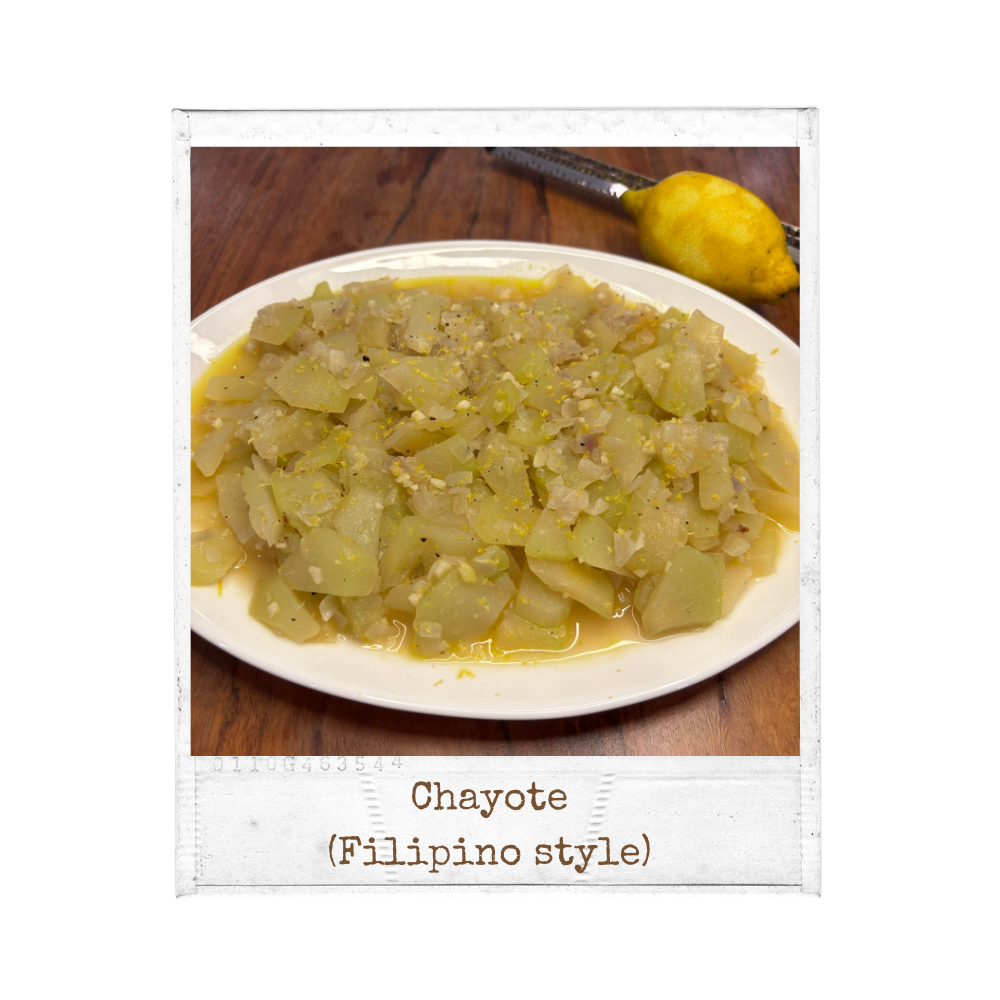
Chayote (Filipino style)
-
2 tbsp olive oil
2 medium red onion (about 1 ½ cups), small dice
3-4 cloves garlic
2 large chayotes, peeled, cored, and cut into medium chunks
1 cup vegetable stock
Salt and fresh cracked pepper
Zest of ½ lemon
-
Heat oil in a sauté pan over medium heat.
Sweat the onions until they have softened a bit, about 5 – 10 minutes. Add in the garlic and cook for another 5 minutes.
Add in the chayote chunks and cook for about 5 minutes.
Pour in the vegetable stock, a bit of salt and a healthy amount of freshly cracked pepper.
Cover and cook for 15 minutes (or so), stirring occasionally.
Once the chayote is cooked but still has a bite, it is done.
Salt and pepper to taste.
Transfer to a serving dish and garnish with lemon zest.
Chef’s note: ground pork is a delicious addition to the sauteed chayote. Cook the ground pork first and perhaps add a little fish sauce. Set aside and then add into the chayote. Serve over rice or vermicelli rice noodles!
-
Description text goes here

Chicken Noodle Soup Pasta Salad
-
Chicken Dressing:
1 quart (4 cups) homemade chicken stock (no salt) or low sodium store-bought
2-3 tbsp chicken base or 1 chicken bouillon cube (if using low sodium store bought stock, you might need less of the chicken base/bouillon cube)
1 parmesan rind (optional)
½ cup (125 grams) mayonnaise plus 2 tbsp
Juice of 1 lemon (roughly 2 tbsp)
Schmaltz-y Veggies:
¼ cup schmaltz (rendered chicken fat)
1 medium onion, diced
2 cloves of garlic, minced
1 ½ cups (about 200 grams) carrots, diced
1 ½ cups (about 200 grams) celery, diced
Couple whole sprigs of thyme
Salt and pepper
-
Chicken Dressing:
In a saucepan, over medium high heat, combine the chicken stock, chicken base, and parmesan rind.
Bring up to a rapid boil and reduce the mixture to 1 ¼ cup of liquid, stirring every so often.
Pour through a sieve to get rid of any parmesan bits and set aside to cool to room temperature.
In a large bowl, combine 1 cup of the cooled chicken liquid (save the extra ¼ cup for later) with a ½ cup mayonnaise, and the lemon juice (I usually start with the juice of ½ the lemon and then gradually add more depending on taste).
Schmaltz-y Veggies:
In a large sauté pan over medium heat, melt your schmaltz.
Sweat the onions for about 5 minutes until they start to soften.
Add the garlic and cook for a couple minutes more.
Throw in the carrots, celery, and thyme sprigs. Cook until all the vegetable have softened a bit but still maintain a bite.
Salt and pepper to taste.
Discard the thyme and set aside to cool.
-
Directions:
In the large bowl with the dressing, add in the schmaltz-y veggies, noodles, chopped parsley (save some for garnish), and ½ tsp chopped dill.
Combine and adjust your seasoning to taste, particularly if you need a bit more lemon juice or dill. Place in the fridge for at least an hour.
Right before you are ready to serve, combine the additional ¼ cup of the chicken liquid with 2 tbsp mayonnaise.
Pour over the salad and toss around to “rehydrate” a bit.
Garnish with additional chopped parsley, dill sprigs, and lemon zest.

Chinese "Crack"cumbers
-
4-6 Persian cucumbers (4 cups or so)
1 tbsp sugar
¾ tsp salt
1-2 clove garlic, finely minced
A handful of cilantro, chopped
2 tbsp black vinegar
2 tbsp soy sauce
2 tsp sesame oil
Small red bird’s eye chili, thinly sliced or chili crunch (optional)
Sesame seeds to garnish
-
Slice the tips off the cucumbers and cut lengthwise down the middle.
Take a mallet or a rolling pin and give them a gentle whack.
Cut them up into bit size pieces (1/2 to 1 inch) and transfer to a mixing bowl.
To the cucumbers add the sugar, salt, garlic, and cilantro. Let sit for about 5 minutes.
Add the black vinegar, soy sauce, sesame oil, and red chili (if you are opting in) and mix together.
Taste and adjust the flavors to you liking.
Let sit for an hour or so in the fridge.
Transfer to a serving bowl and garnish with sesame seeds.
Chef’s note: Don’t skip tasting and adjusting the flavors. The recipe above is a base and usually needs a bit of adjustment depending on your palate.
In Beijing, nearly every restaurant I ate at served some sort of variation of Chinese cucumbers. Each restaurant had its own spin like serving them in sticks or dipping the cucumber in a dark rick thick sauce instead of tossing them in a marinade. All were delicious in their own way, but this is the style I liked the most!

Cowboy Caviar (aka Texas Caviar)
-
1 large tomato, diced
1 large green pepper, diced
1 large roasted red pepper, diced
2 cloves of garlic, minced
3 cobs of grilled corn, kernels removed or 1 can (15 oz.) sweetcorn, drained
1 jalapeño, seeded, small dice
2 green onions (white and green parts), thinly sliced
1 can (15 oz.) black eyed peas, drained and rinsed
1 can (15 oz.) hominy, drained and rinsed
¼ cup cilantro, chopped
1-2 limes, juiced (about 2 tbsp)
¼ cup Italian dressing
Salt and pepper to taste
-
In a medium size bowl, combine all the ingredients except the lime juice and Italian dressing.
Once everything is combined, add the lime juice and Italian dressing and give it a good mix. Season with salt and pepper and adjust to taste. You may need to add additional lime juice and Italian dressing based on your palate.
Serve with tortilla or potato chips.

Eggplant Caprese
-
1 eggplant
1 tsp salt
1/2 cup all purpose flour
2 eggs, beaten
1 cup panko breadcrumbs
1/2 cup parmesan, grated
Olive oil and butter
Assembly:
2-3 pieces fresh mozzarella, sliced
2-3 ripe tomato, sliced
4 cups arugula, washed and dried
1/2 cup pine nuts, toasted
10+ fresh basil leaves, julienned
Olive oil
Balsamic vinegar
-
Slice the eggplant (about 5 mm).
Lightly sprinkle salt on the eggplant slices and let sit in a strainer or a paper towel to release water for about 30 minutes. This will take away some of the bitterness.
While your eggplant is resting, get your dredging station ready with 3 separate bowls for flour, eggs and combination of the panko breadcrumbs and the parmesan.
Wipe the water and salt off the eggplant and dredge each piece in the flour and tap off excess, then the egg and let excess drip off, then the bread crumb mixture on both sides. Set aside on a plate.
Heat 1-2 tbsp of olive oil and butter in a large sauté pan over medium high heat. Once hot, add a few pieces of the breaded eggplant and cook until golden brown – about 5 or so minutes. Flip and repeat on the other side. Continue cooking all the eggplant slices the same adding olive oil and butter as needed.
-
2-3 pieces fresh mozzarella, sliced
2-3 ripe tomato, sliced
4 cups arugula, washed and dried
1/2 cup pine nuts, toasted
10+ fresh basil leaves, julienned
Olive oil
Balsamic vinegar
Salt and pepper
Directions:
In a small bowl toss together the arugula with a few glugs of olive oil, a few splashes of balsamic and salt and pepper.
There are two ways to serve this dish – on a platter or individual servings:
For individual servings, layer eggplant, tomato, cheese, basil and repeat 2 more times (using 4 pieces of eggplant – top and bottom). Top with a handful of the arugula salad and garnish with toasted pine nuts, extra drizzle of olive oil and balsamic, fresh cracked pepper and a sprinkle of finishing salt.
For serving on a platter: place the arugula on the bottom of your platter and arrange tomato, mozzarella, and eggplant slices on a platter. Arrange basil leaves between the slices. Garnish with toasted pine nuts, extra drizzle of olive oil and balsamic, fresh cracked pepper and a sprinkle of finishing salt.
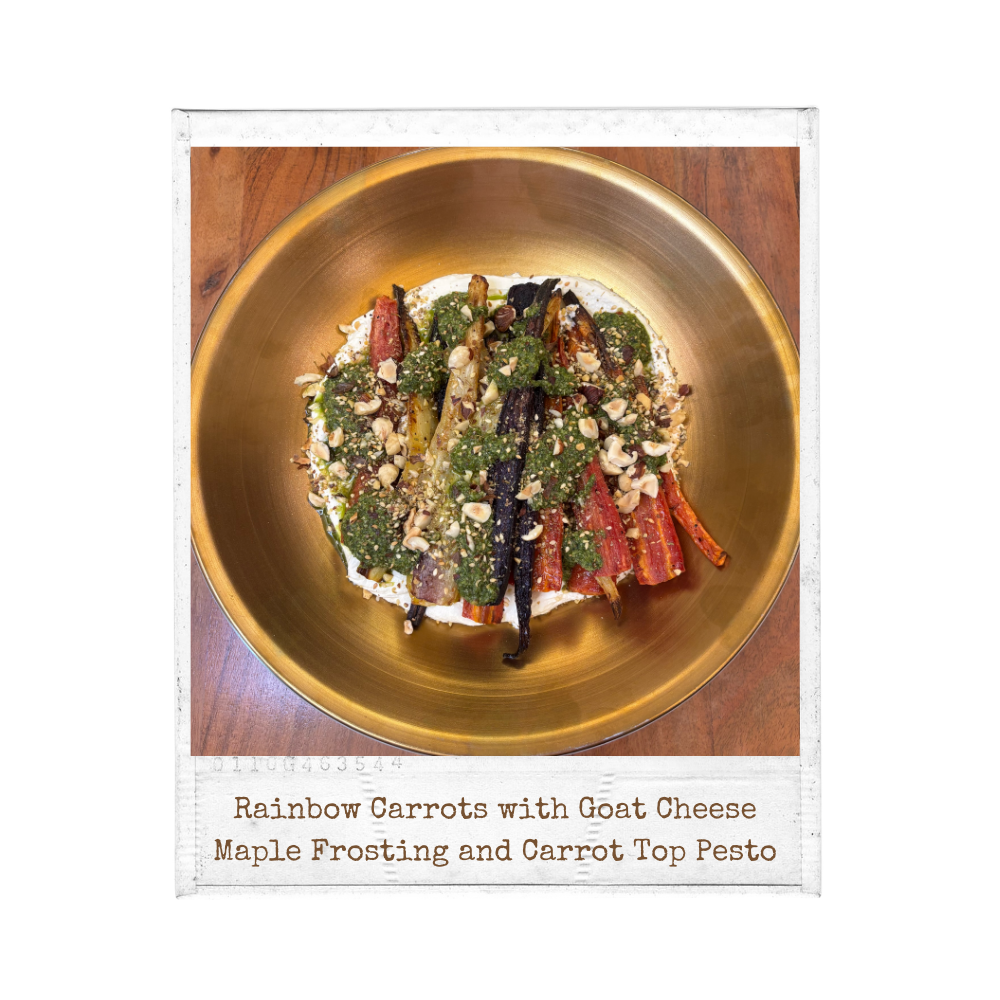
Rainbow Carrots with Goat Cheese Maple Frosting and Carrot Top Pesto
-
Carrot Top Pesto:
1 cup (40 grams) carrot top greens, tough stems removed
½ cup (40 grams) whole hazelnuts
¼ cup (10 grams) parsley
1 clove garlic, roughly chopped
2 tsp capers, drained
2 tsp nutritional yeast
½ lemon, juiced
1 cup olive oil
Goat Cheese Maple Frosting:
6 tbsp (85 grams) butter, room temperature
3 oz. (85 grams) cream cheese, room temperature
2 oz. goat cheese, room temperature
1 tbsp maple syrup
Pinch of salt
Roasted Carrots:
1 bunch rainbow carrots (or more if you like!), cut in half lengthwise
2 tbsp olive oil
-
Carrot Top Pesto:
Rinse the carrot top greens, discard tough stems, and dry.
In a blender add the carrot tops greens, hazelnuts, parsley, chopped garlic, capers, nutritional yeast, lemon juice, and a bit of salt, and pepper. Blend until combined, generally. Scrape the sides down with a rubber spatula.
While the blender is on low, slowly pour in the olive oil in a steady stream. Scrape the sides down with a rubber spatula. Blend until smooth. Salt and pepper to taste.
Goat Cheese Maple Frosting:
In a mixing bowl, combine the butter, cream cheese, and goat cheese with either beaters or ideally the whip attachment on your stand mixer. Beat for 5 minutes or until it becomes smooth and fluffy.
Add in the maple syrup and salt. Beat for another 30 seconds until everything is completely incorporated.
Set aside.
Roasted Carrots:
Preheat oven to 400 °F (200 °C).
Toss the carrots in olive oil, salt and pepper.
Roast in the oven for 30-40 minutes, turning the carrots over after about 20 minutes.
-
¼ cup toasted hazelnuts, rough chop
Dukkah
Directions:
Spread the frosting as your base.
Place the roasted carrots on top the frosting.
Drizzle your desired amount of the carrot top pesto followed by the toasted hazelnuts and a generous sprinkle of dukkah
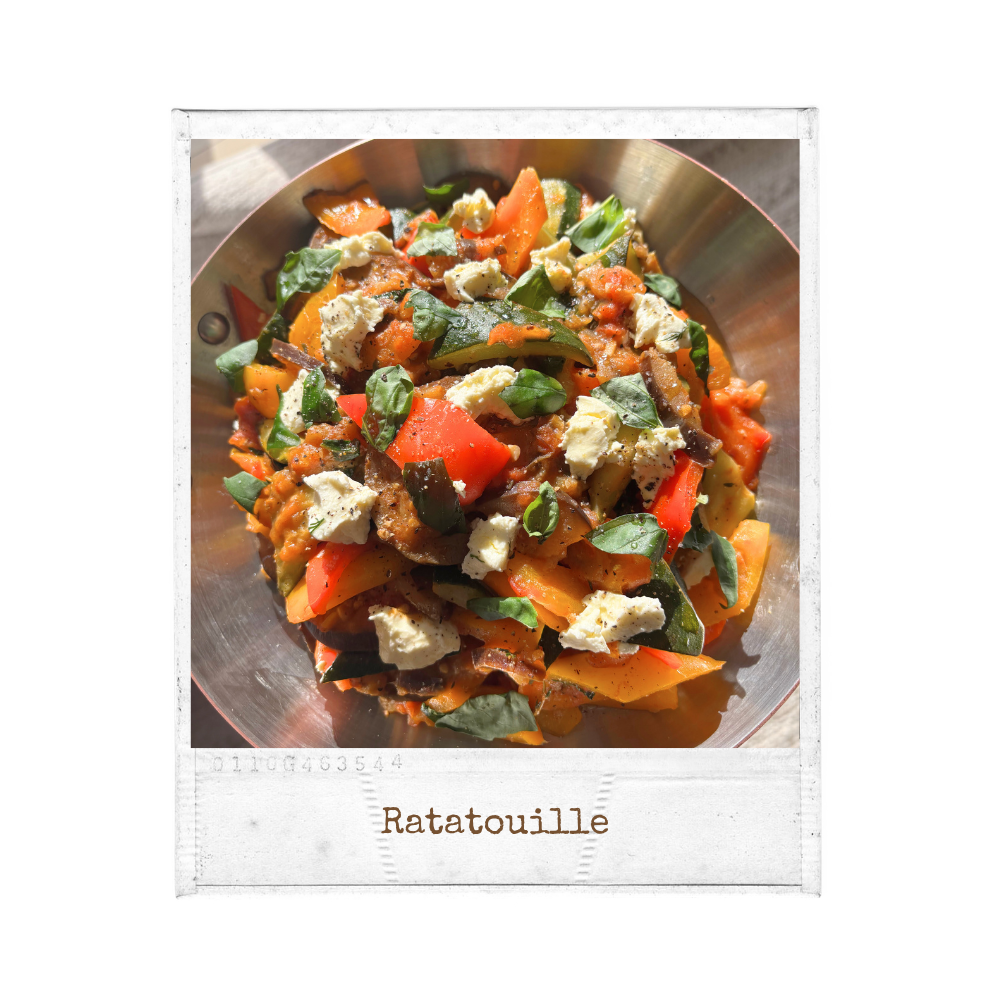
Ratatouille
-
Olive oil
3 bell peppers (mix of red, green, orange, or yellow)
1 medium eggplant
2 medium zucchinis
2-3 large tomatoes, skin removed and rough chop (about 2 cups)
4 cloves garlic, smashed and whole
1 garlic, minced
6-8 sprigs of thyme or roughly 2 tsp dried thyme
Thinly sliced or torn basil
Salt and pepper
For servings:
Goat cheese (optional)
-
Dice all your vegetables evenly and the same shape. I like slicing them into medium triangles or on the biased.
Set aside in separate bowls (the bell pepper should be separated by color).
Smash and peel 4 cloves of garlic and add to each individual bowl of vegetables (except the zucchini).
In a medium size pot over medium heat, cook each color pepper separately for 2-3 minutes with one piece of smashed garlic, a sprig of thyme or a sprinkle of dried thyme, and a bit of olive oil, salt and pepper. Set aside back into its bowl and go on to the next color. This will help the vegetable keep their bright color.
Sauté the eggplant the same way for a couple minutes.
Do not cook the zucchini.
Once all the peppers and eggplant are cooked add all the cooked vegetables back into the pot along with the rest of the thyme, chopped tomatoes (without skin) and the minced garlic clove.
Let this reduce and thicken for about 20 minutes, stirring every so often.
Add the raw zucchini into the vegetable stew and cook for another 10 or so minutes until the zucchini softens just a bit but still has a nice bite.
-
Place the mixture in a serving dish and garnish with basil, olive oil, and salt and pepper. If you are feeling super crazy, add a sprinkle of goat cheese!
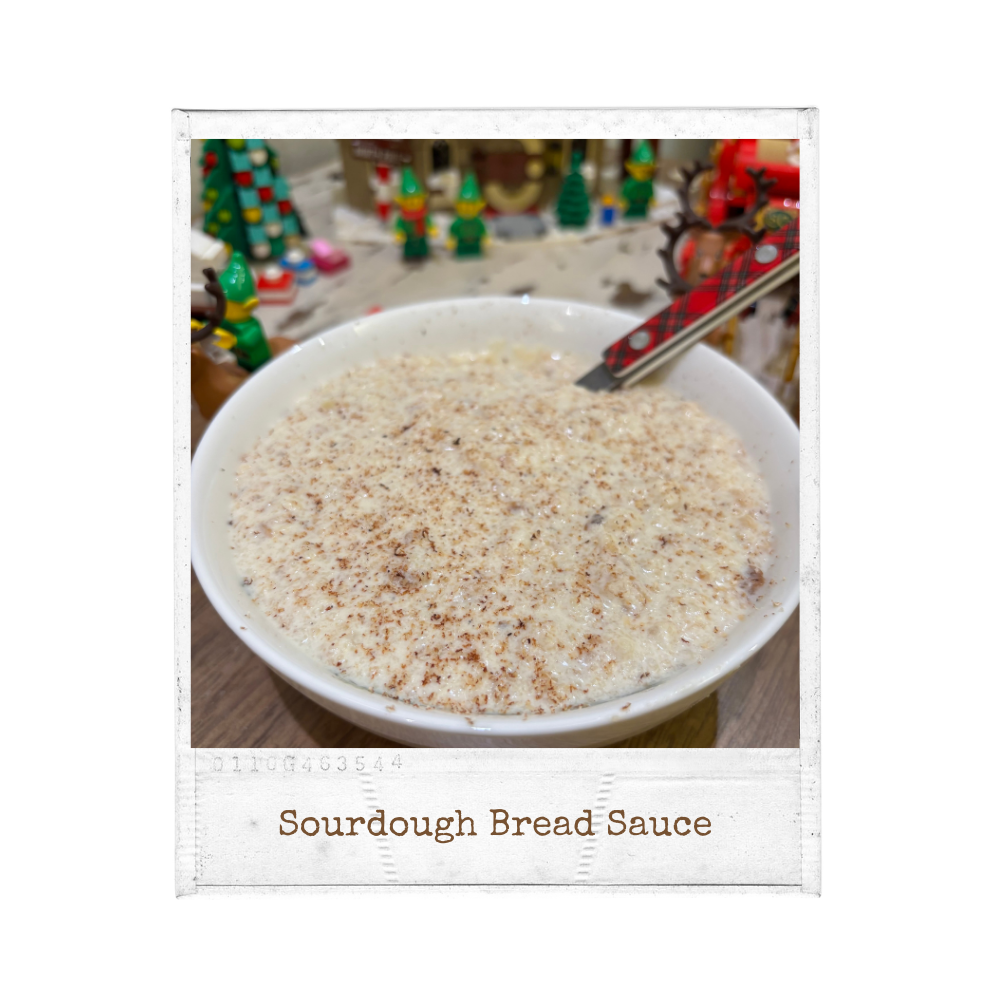
Sourdough Bread Sauce
-
½ cups (350 ml) whole milk
3 sprigs of thyme
6 black peppercorns
1 bay leaf
4 whole cloves
1 quarter of an onion, left whole
50-60 grams toasted sourdough breadcrumbs
1/3 cup heavy cream
2 tbsp butter
Zest of fresh nutmeg
Salt and pepper
-
In a small saucepan, combine the milk, thyme, peppercorns, bay leaf, cloves, and onion.
Simmer on low for 20 minutes.
Either fish all the ingredients out of the milk with a slotted spoon (and discard) or strain the milk into another saucepan and return to medium heat.
Add in the breadcrumbs a little at a time bringing the mixture to a simmer until it has thickened (about 2-3 minutes)
Stir in the cream and the butter.
Season with salt and pepper to taste.
Pour into your serving dish and finish with freshly zested nutmeg.
Chef’s note: a traditional bread sauce uses white bread and thus it should be made on the day of consumption because it tends to turn grey. With the sourdough, you can make the day before as it is naturally more of a brownish color due to the color of the bread.
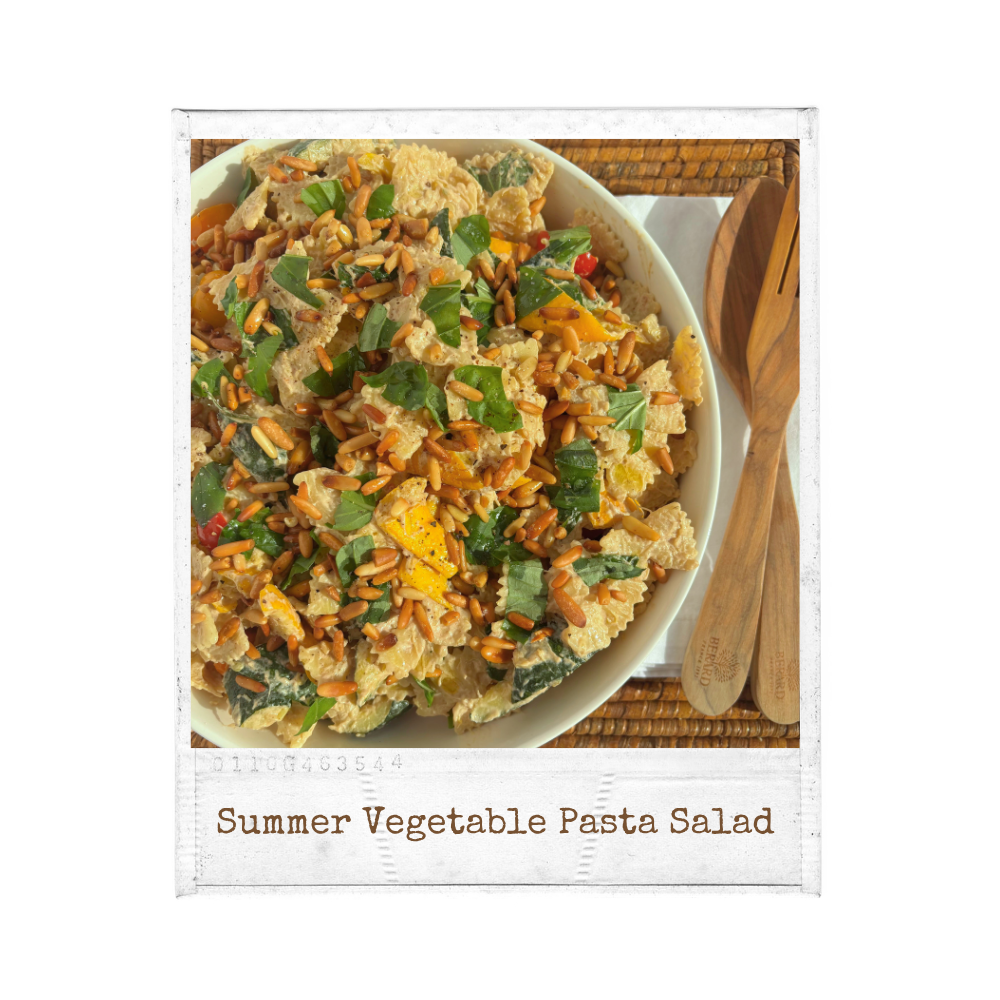
Summer Vegetable Pasta Salad
-
2 (medium to large) zucchinis
2 (medium to large) yellow squash
1 box (1 lb./500 grams) farfalle pasta
340 grams (12 oz.) goat cheese, room temperature
¼ cup balsamic vinegar
1 package (8 oz.) cherry tomatoes, halved
20 fresh basil leaves
For serving:
1/3 cup pine nuts, toasted
Olive oil, salt, pepper
-
Preheat oven to 400 °F (200°C).
Boil a large pot of salted water.
Slice the zucchini and yellow squash into quarters lengthwise. Trim the seeds out and cut into about 1-inch section. I like to cut them on the biased.
Toss the zucchini and yellow squash in olive oil, salt and fresh ground pepper. Bake for roughly 15 minutes or so. Don’t overcook them, you want them to still have a nice bite.
When the water is boiling, add the noodles and cook according to the package directions to al dente.
Pop your goat cheese into a large bowl.
Once the noodles are finished cooking, strain them and add them over your goat cheese while still hot as well as your zucchini and yellow squash and let it all sit for about 5 minutes which will help soften the goat cheese.
Add the balsamic and gently stir everything together until combined.
Once cooled a bit, add the cherry tomatoes, and tear in about 10-15 basil leaves and stir to combine. Salt and pepper to taste.
-
Pour the pasta salad into your serving dish. Garnish with more basil leaves, the toasted pine nuts, a drizzle of olive oil, and salt and fresh cracked pepper.
I generally serve at room temperature.
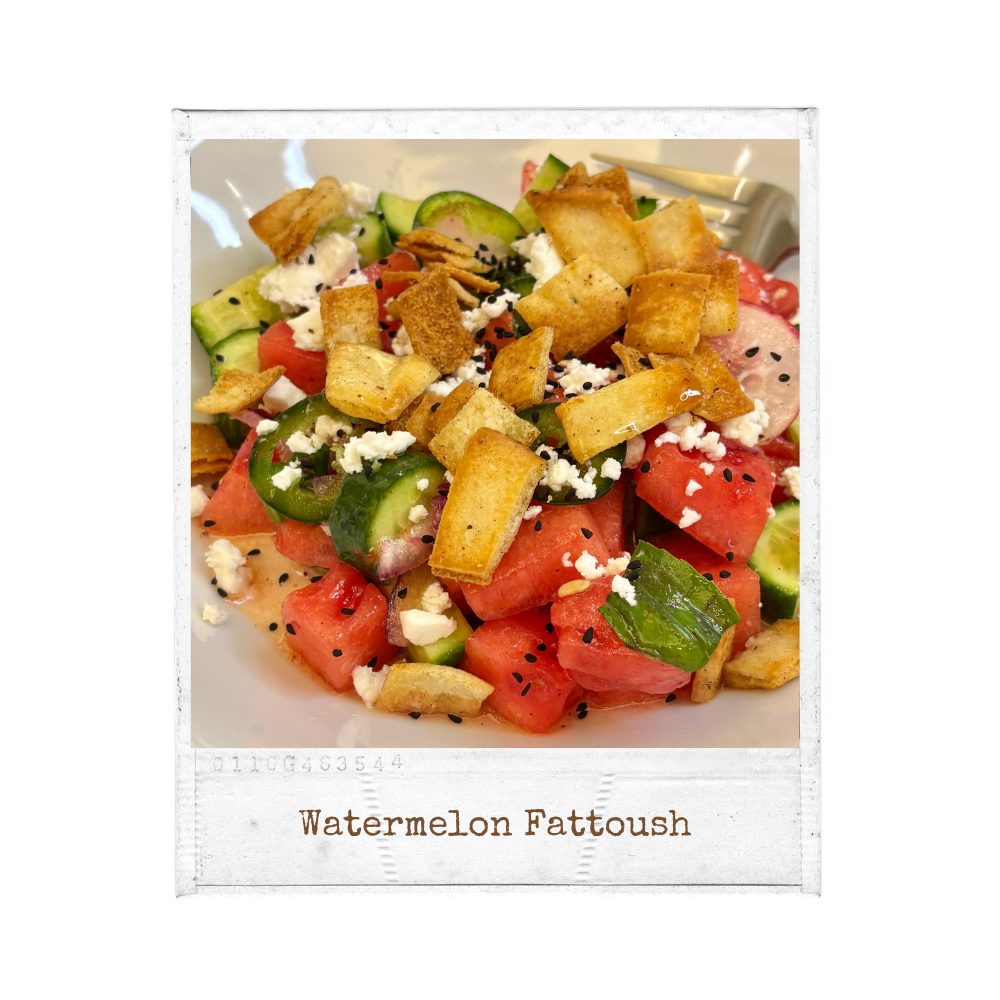
Watermelon Fattoush
-
Arabic Croutons:
2-3pieces Arabic or pita bread, cubed
2-3 tbsp olive oil
Vinaigrette:
2 tbsp lemon juice (1 lemon)
3 tbsp neutral oil
2 tbsp feta liquid (or salt to taste)
1 tbsp honey
½ tsp sumac
A few cracks of fresh pepper
Salad Base:
4 cups (700 grams) seedless watermelon, medium dice
3-4 (200 grams) Persian cucumbers, medium dice
3-4 (75 grams) radish, thinly sliced
½ small (50 grams) red onion, sliced thinly and soaked in water for 15 minutes or so
Large handful of mint, roughly chopped or torn
Large handful of fresh basil, roughly chopped or torn
-
Description text goes here
-
50 grams (or more!) crumbled feta
2 tsp Nigella seeds
Toasted Arabic croutons
Thinly sliced jalapenos (optional)
Remaining torn basil and mint
Directions:
In your serving bowl, place the watermelon mixture as a base. Add crumbled feta and the Arabic croutons on top. Drizzle with a bit more of the vinaigrette and sprinkle the remaining basil and mint, jalapeños (if you are using), and nigella seeds.

White Asparagus + Truffle + Parmesan + Egg Yolk
-
Asparagus Preparation:
1 bunch white asparagus
salt
-
Discard any stalks that are looking wrinkly and limp. Peel your white asparagus as the skin is quite tough and bitter. Remove the last ½ inch or so of the woody bottoms and discard.
Bring a large saucepan of lightly salted water to a boil then lower to a simmer.
While you are waiting for the water to boil, prepare an ice bath.
Cook the white asparagus for 8-15 minutes. It will depend on how thick your spears are, but you should be able to pierce with a fork yet still have a bit of a bite. Do not overcook, as it might become stringy and mushy, which is not ideal.
Once done, plunge into your prepared ice bath.
Once cooled, pat dry with a towel.
-
Truffle salt
Truffle honey
Good parmesan
Boiled egg yolk
Olive oil
Fresh cracked pepper
Directions:
Arrange the asparagus on a platter.
Sprinkle with truffle salt, followed by a nice drizzle of truffle honey, and shaved parmesan.
Grate your boiled egg over the top followed by a couple grinds of fresh cracked pepper.
Give it a drizzle of olive oil or if you are feeling frisky, a bit of truffle oil (but be careful, a little goes a long way).